Buying a Car from the North? Check the Rust
Buying a used car across the border is common in this part of the country. Dundalk, Omeath, Carlingford - people here have always crossed into Newry and beyond for a good deal on a second-hand car. The prices can be right, the choice is good, and the journey is short.
But there is one thing worth taking seriously before you hand over cash: the underside of the car.
This is a practical guide to what to look for, what it means, and what to do about it.
Why NI and UK Cars Can Carry More Rust
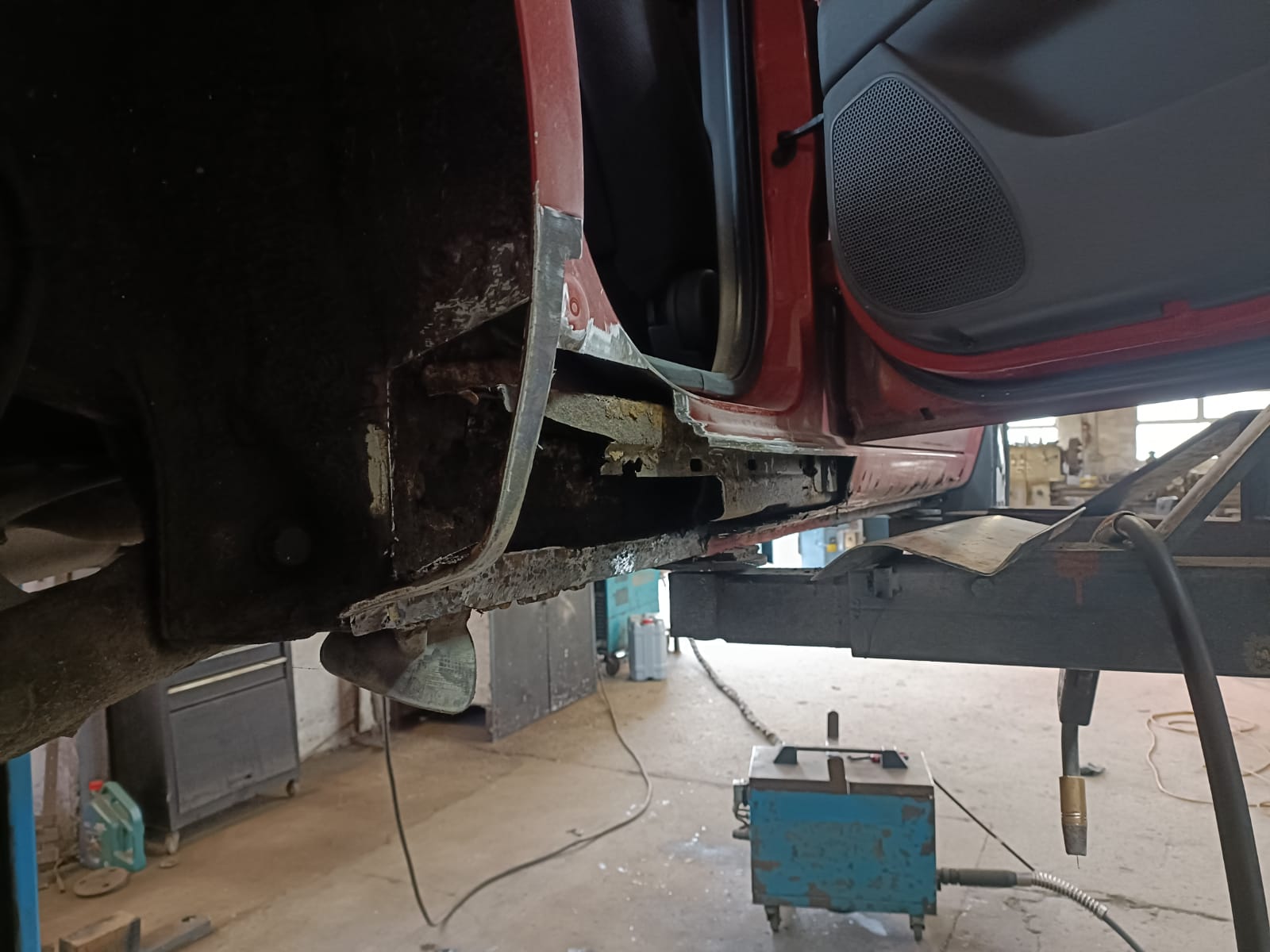
Road authorities in Northern Ireland and Britain typically apply heavier volumes of road salt in winter conditions than the Republic does. Road salt gets the job done - it keeps roads driveable at low temperatures - but it is corrosive to steel, and it gets into every gap and crevice on the underside of a vehicle.
If a car has spent several winters on heavily salted roads, that history shows up. Road salt residue holds moisture against bare metal, accelerates oxidation, and works its way into box sections and cavities where you cannot see it from outside the car.
This is not a reason to avoid buying from the North. It is a reason to look carefully at the underside before you buy, because a car with solid bodywork and good paint can hide serious underbody corrosion that you will not spot from the outside.
The MOT vs NCT Distinction
When you buy a car in Northern Ireland, it comes with an MOT certificate. The MOT is the UK and NI roadworthiness test. It is a real test, properly run, and a current MOT cert tells you the car passed inspection.
The NCT is the Republic’s equivalent. The two tests cover similar ground but are entirely separate systems. A Northern-registered car with a current MOT is not road-legal in the Republic without an Irish NCT.
If you import a car from the North that is of NCT age, you must present it for an NCT within 30 days of registering it in Ireland. The car will go up on a lift and be inspected physically. A Belfast MOT does not carry across. If the NCT inspector finds structural rust, the car fails - regardless of what the MOT said.
You can check the MOT history of any UK or NI vehicle on motorcheck.ie using the registration number. That is worth doing before you travel to view the car. But MOT history is no substitute for eyes on the underside.
For a full breakdown of what the NCT rust criteria actually involve, read our NCT rust fail guide.
What to Check Before You Buy
The areas below are where road-salt corrosion concentrates. Get the car on a ramp if at all possible. A torch and your eyes are enough to make a useful assessment. If the seller cannot accommodate a ramp inspection - or will not - that itself tells you something.
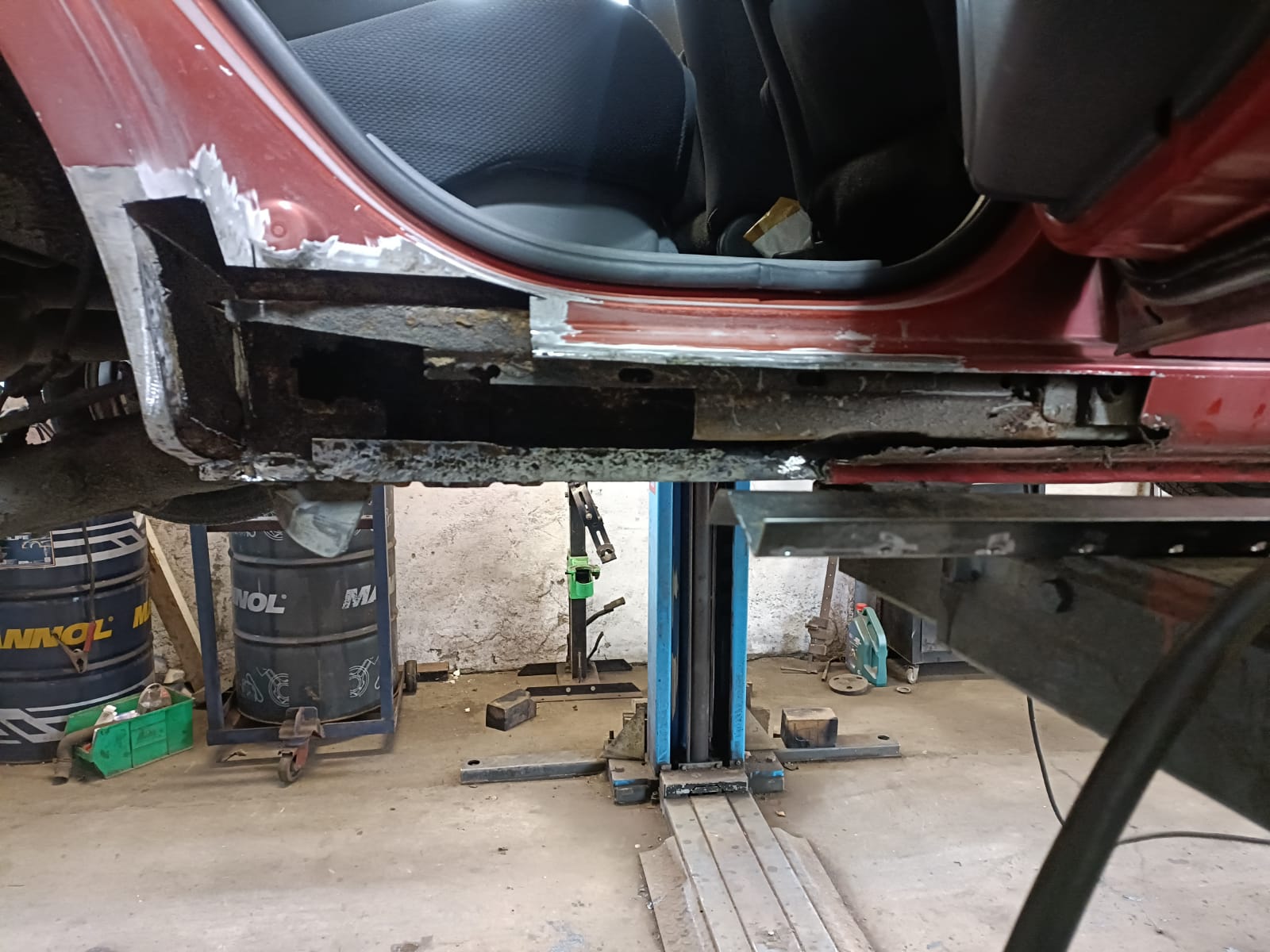
Sills - inner and outer. The sill box section runs along the bottom of the car between the front and rear wheels, on both sides. There is an outer sill (the visible panel) and an inner sill (the structural box section behind it). Outer sills can be cosmetically repaired cheaply, hiding rot underneath. Press the outer sill firmly - if it flexes, moves, or feels thin, there is likely rust behind it. The inner sill is structural and significantly more involved to repair. Any perforation or serious weakness in the inner sill is an NCT fail and a structural concern.
Floor pan. Lie on the ground and look up through the wheel arches at the flat underfloor panels on each side. Surface rust and light scaling is common on older cars. Holes, perforation, or areas that move when pressed are more serious.
Wheel arches. The metal where the arch meets the body is a trap for road debris and salt-soaked mud. Both the arch liner area and the body metal behind it corrode. Peel back or look behind plastic arch liners where you can.
Subframe and suspension mounts. The subframe carries the suspension, steering, and on many cars the engine. Corrosion at the points where the subframe bolts to the body is a structural concern and a likely NCT fail. Look for heavy scaling, perforation, or any visible movement when weight is applied.
Brake pipe runs. Steel brake lines run the length of the car under the floor. They are vulnerable to road-salt corrosion and a perforation means brake failure. Look for heavy pitting, rust bubbling, or obvious corrosion on the line runs.
Chassis rails. On monocoque cars, the chassis rails are the main structural channels running fore-to-aft under the floor. On vehicles with a separate chassis frame - older Land Rovers, commercial vehicles, some 4x4s - the rails are the primary structure. Corrosion on chassis rails that affects their depth or continuity is a serious structural issue.
Our broader vehicle rust and rot repair service page covers what structural and cosmetic rust repair actually involves if you want more context.
Walk Away or Repair?
Not every rust finding means walking away. There is a difference between fixable and a money pit.
Walk away if you see: perforated inner sills on both sides with significant surface area gone; floor pan rust that has perforated through in multiple places; subframe mounts with loose or missing metal; chassis rail corrosion that has gone through the depth of the rail; brake pipe runs that are heavily corroded or broken.
These are not small jobs, and on a car you have not yet bought, you have no idea what else is under there.
Negotiate or proceed with repair costs built in if you see: a single outer sill with surface rust and early internal penetration; localised floor pan rust that has not perforated; wheel arch rot on one side; light-to-moderate surface corrosion on structural areas that has not gone deep. These are real jobs but bounded ones, and if the price reflects the work needed, they can be worth doing.
Surface rust on cosmetic panels - wings, doors, bonnet - is a different category. That is bodywork, not structural. It matters for appearance and for long-term preservation, but it is not an NCT structural fail in itself.
If you are not sure which side of the line something falls on, the answer is to get a proper look before buying, not after.
You can also read our guide to rust checks when buying any second-hand car in Ireland for more on what to watch for regardless of where the car is from.
The MOT-to-NCT Gap
One thing that catches buyers out: a car can pass its MOT in the North and then fail its Irish NCT for corrosion. This is not because one test is better than the other. It is because the tests are carried out by different people, at different centres, on different days - and corrosion progresses over time.
There is also a genuine difference in test focus. The NCT corrosion criteria are specific: corrosion within 300mm of a structural mounting point, or on highly-stressed sections like chassis rails, can be graded Dangerous - meaning the car cannot be driven from the centre. A pass in one jurisdiction does not guarantee a pass in another.
If a seller is pointing to a fresh MOT as a reason not to worry about rust, that is not a reliable argument. Get under the car yourself.
Get a Pre-Purchase Inspection
If you are seriously considering a car from the North - or anywhere else - and you want a proper look before you commit, bring it to us.
We put vehicles on a lift every day. We can tell you what is there structurally, what condition the sills and floor and chassis rails are in, and whether a repair is worthwhile - before you hand over money and drive it away.
Call Stephen on 083 807 7144 or send a WhatsApp with photos if you want to talk it through first. We are in Omeath, about 15 minutes from the border on the Carlingford Lough coast - straightforward to get to from Dundalk or Newry.
If the car needs work after purchase, our vehicle rust and rot repair service covers structural sill repair, floor pan welding, chassis rail work, and any other underbody structural issue. We cut out the rot and weld in new metal. No filler over structural rust.
Frequently Asked Questions
Do cars from Northern Ireland rust more than Southern-registered cars?
Not inevitably, but NI and UK roads typically see heavier road-salt application than the Republic, particularly in winter. If a car has been on salted roads regularly, the underside will show it. It's not a guarantee - a well-maintained NI car can be in excellent shape - but it's a real factor worth checking carefully on any cross-border purchase.
What is the difference between an MOT and an NCT?
The MOT (Ministry of Transport test) is the UK/NI roadworthiness test. The NCT (National Car Test) is the Republic of Ireland equivalent. They test broadly similar things but are administered separately. An MOT cert does not cover you in the Republic, and an NCT cert does not cover you in the North.
Can a current MOT certificate replace an NCT when I import a car?
No. If you buy a car from the North and import it to the Republic, you must get an Irish NCT within 30 days (for vehicles of NCT age). A valid MOT does not substitute. The physical car will be inspected again, so a vehicle that passed its MOT in Belfast will still need to pass an NCT inspection in Ireland - sometimes with different results.
Where are the main rust spots to check on a car from the North?
Focus on: inner and outer sills, the floor pan, both wheel arches, the subframe and suspension mounting points, the runs of brake pipework under the car, and the chassis rails. These are where road-salt corrosion concentrates and where structural rust typically starts.