Horsebox & Trailer Chassis Repair in Louth
If you work with horses or run livestock on Cooley farms, there is a good chance you have a trailer that has been doing serious mileage on the R173 and the lanes behind it. Horseboxes, livestock trailers, plant trailers, tipping trailers - they all share the same weakness. The chassis rusts. And when it does, the trailer becomes dangerous and illegal to tow on any public road.
This post covers what causes trailer and horsebox chassis rot, how to spot it before it becomes a crisis, what the law actually requires, and what the repair process looks like.
Why Trailer Chassis Rot Is a Louth Problem
Agricultural trailers spend their lives in conditions that accelerate corrosion faster than almost any road vehicle. Consider what a livestock trailer sees in a typical Louth farming year: mud, slurry, and manure packed into every box section corner and drain hole from November through to spring. Then road salt on every public road run from October to April. Then the coastal salt air that anyone working the Cooley peninsula knows well.
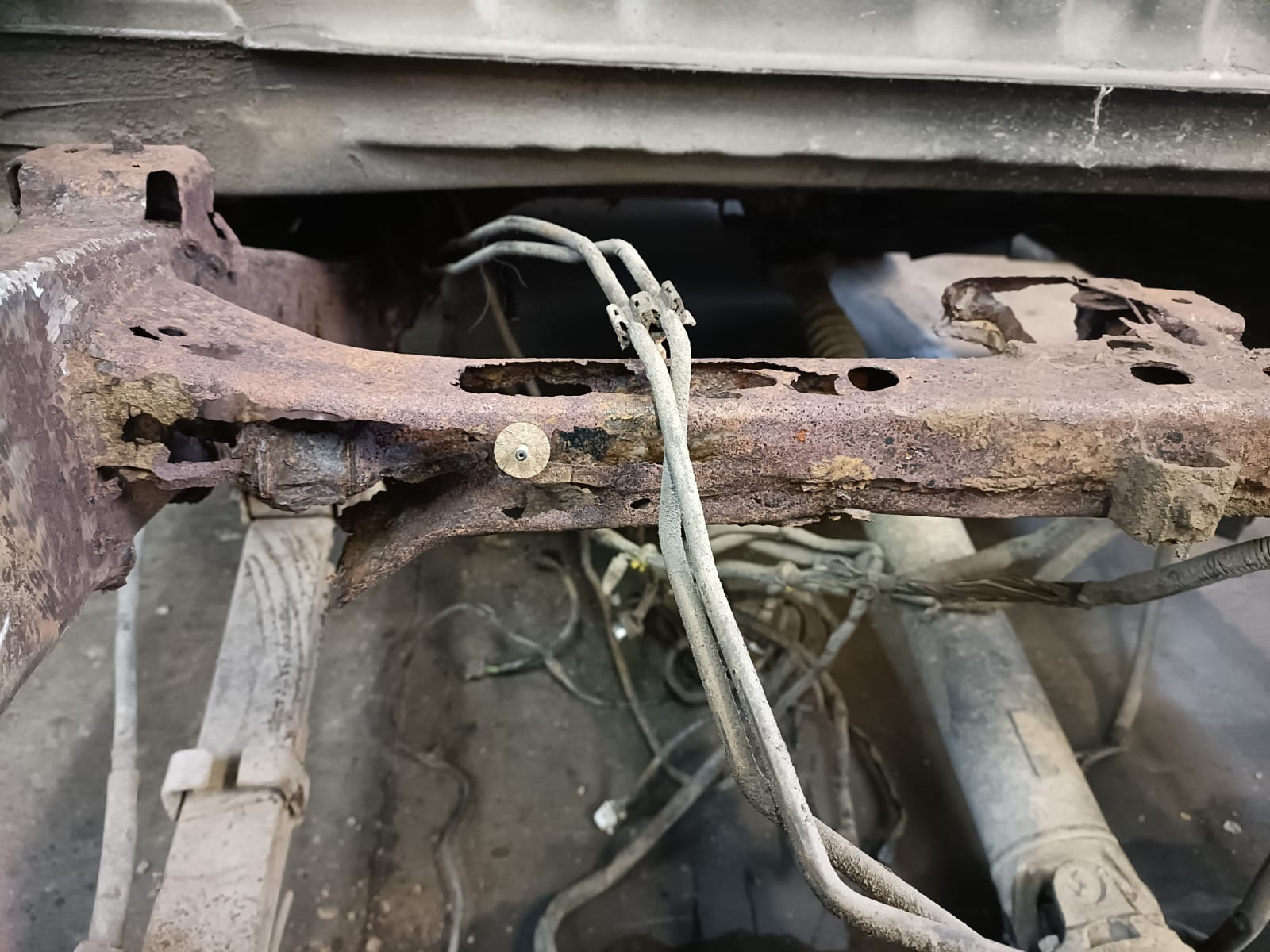
Mild steel box section - the standard material for trailer and horsebox chassis construction - is tough when it is intact. But it has no internal protection. Where mud sits in a corner, where manure packs against a weld seam, where a drain hole has long since blocked with compacted debris, the steel is wet from both inside and outside at the same time. Oxygen and moisture do the rest. The steel does not rust from the surface down - it rusts from the weld seam out, from the inside of the tube outward, from the drain hole rim in every direction.
By the time the outside looks worrying, the inside is often already gone.
Where the Rot Starts
The same failure points come up on trailers again and again:
Weld seams. Wherever steel sections are joined by welding, there is a transition zone where the protective mill scale has been disrupted, where surface coatings rarely get full coverage, and where water tracks down and sits. These are the first places to check on any trailer.
Drain holes and blocked corners. Trailer chassis are supposed to drain. When drain holes block with compressed mud or manure, standing water stays inside the box section indefinitely. The steel inside rots out while the outside still looks presentable.
Cross-members and bracing. The horizontal sections that span across the trailer floor carry the load from the bed above and sit closest to the contamination from the load. On livestock trailers, years of pressure-washing with manure still present in the corners accelerates the process significantly.
Floor-to-chassis junctions on horseboxes. This is the one that causes real danger. Horsebox floors are typically timber boards on steel cross-members. The timber holds moisture against the steel beneath it. The steel rots. The timber then rots too. The floor becomes soft. And a horse that puts a foot through a rotten horsebox floor at 80km/h on the R173 is a serious accident waiting to happen.
The Tap Test - and What It Tells You
The simplest diagnostic on a trailer chassis is the tap test. Take a hammer or a heavy screwdriver handle and strike the chassis members firmly in different places.
Good structural steel rings. The sound is sharp and clear, with a resonance to it. Steel that has rotted internally - where the wall has thinned significantly or the section has gone hollow - sounds dead. The noise is dull, flat, no ring. Sometimes it sounds almost like you are striking soft clay rather than steel.
Work along the main rails, across each cross-member, and particularly at weld seams and around drain holes. Anywhere that sounds wrong is worth looking at more carefully. Anywhere that the surface is bubbling, showing weeping rust tracks from a seam, or visibly perforated has already passed the point where a tap test is needed.
For a proper structural assessment, our chassis repair service includes a full inspection before any work starts. We look at the whole frame, not just the obvious areas.
What the Law Actually Requires
This is the part that confuses a lot of farmers and horsebox owners.
Most agricultural trailers and horseboxes are not subject to mandatory CVRT testing. The CVRT (Commercial Vehicle Roadworthiness Test, which replaced the old DoE test) applies to vans, jeeps, commercial vehicles, and trailers over 3,500kg in certain categories. Standard farm trailers and the vast majority of horseboxes fall outside the mandatory testing schedule.
But “no mandatory test” does not mean “no legal requirement.”
Any trailer towed on a public road in Ireland must be roadworthy by law. A structurally deficient trailer - one with cracked chassis sections, perforated box members, or rotted floor supports - is illegal to tow on any public road, regardless of whether that trailer needs a CVRT or not. The RSA and Garda Siochana can inspect and detain any trailer they consider unroadworthy. In the event of an incident involving a trailer in structural disrepair, insurance cover can be voided.
The absence of a mandatory test is not a licence to run a dangerous trailer. It just means the check is your responsibility rather than a state requirement.
For vehicles that do need formal testing - vans, jeeps, horse trucks over certain weights - the CVRT inspection includes a visual check of the chassis and underbody. A structurally compromised trailer chassis is a fail. See our post on farm trailer chassis repair in Louth for more on the testing landscape for agricultural vehicles.
The Repair Process
When a trailer or horsebox comes in with chassis rot, the repair follows the same logic regardless of the type of trailer or the location of the damage.
Assessment first. We put the trailer up and look at the whole chassis, not just the obvious damage. Rot rarely stops at the point that first becomes visible. Understanding the full extent before cutting anything is what makes the repair accurate.
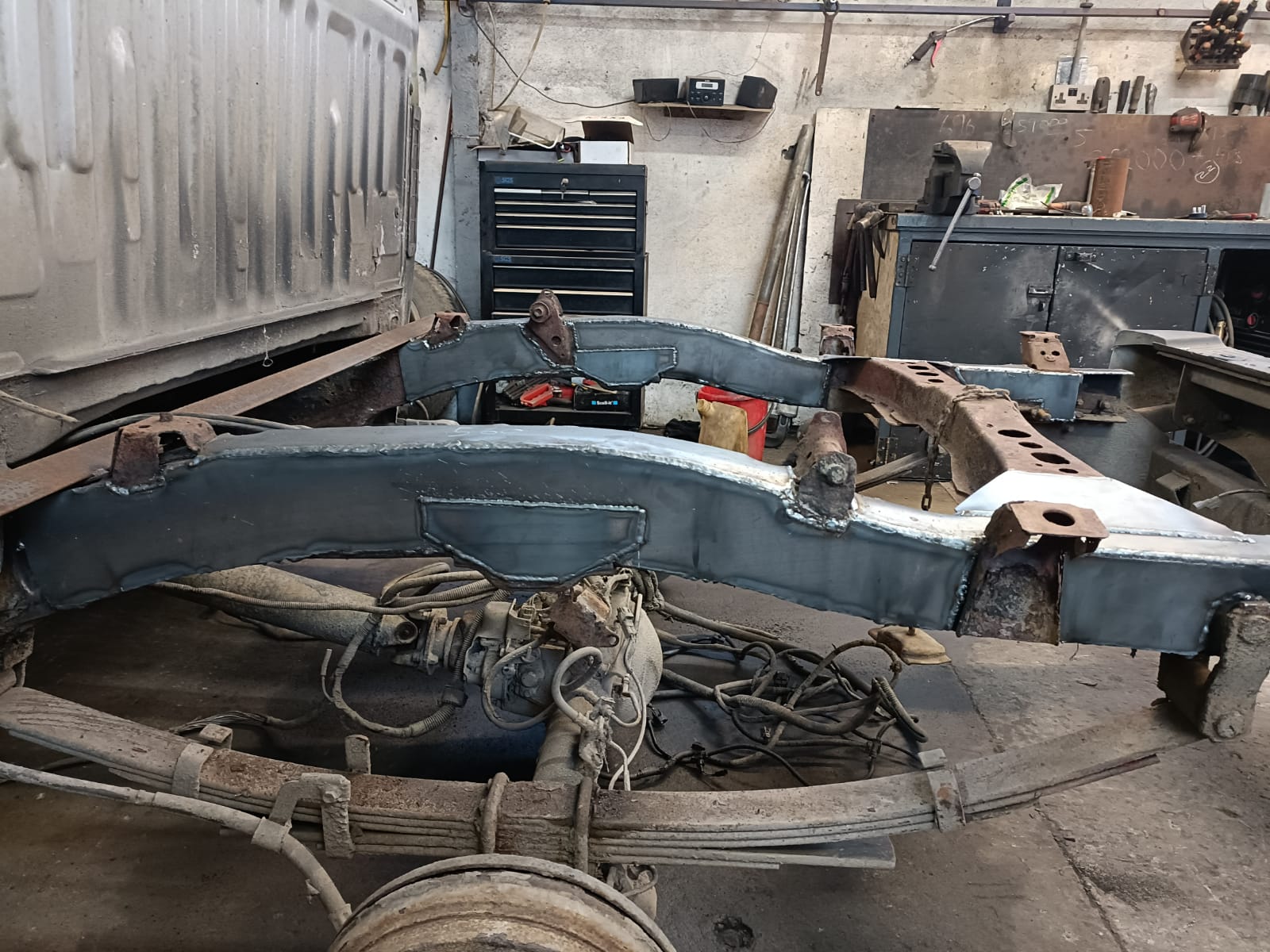
Cut out the rotten steel. There is no shortcut here. Any steel that has lost structural integrity is removed. Patch-welding over rotten box section is not a structural repair - it is a delay. The rot continues behind the patch, often accelerating because the weld heat has further disrupted any remaining protection. The only sound repair is cut and replace.
Weld in new box section. New mild steel box section - matched to the gauge of the original - is cut, fitted, and welded in. Where the original design had drain holes, those are reinstated. Where the section connects to others, the welds are full-penetration where the load demands it.
Horsebox floors. Where the steel cross-members and chassis rails beneath the floor have been repaired, the timber floor boards can then be replaced on the sound structure. This is typically a separate trade - carpentry rather than welding - but the steel work has to be right first.
If you want to understand the full process from inspection to finished repair, our post on how chassis repairs work goes through the detail.
Tipping Trailers and Plant Trailers
Worth mentioning separately, because these see the worst of it.
Tipping trailers carry aggregates, silage, beet, and muck - heavy, wet loads that concentrate onto the floor and sub-frame every working day. The hydraulic pivot points and the rear frame corners carry intense load through every tip. Rot at these points is not just a corrosion problem; it is a structural failure risk under load.
Plant trailers - used for moving excavators, telehandlers, and machinery - have their own version of the same problem. The ramp hinge points and the rear cross-members carry high concentrated loads at low speed. The underside is never clean. The same box-section rot occurs at the same places.
The repair approach is the same. Cut out what is rotten. Weld in new steel. Reinstate the geometry. Test the structure before it goes back to work.
Indicative Costs
Repair costs vary with the extent and location of the rot. A localised section repair on a main rail - a metre or less of new box section welded in - sits in a different range to a full sub-frame rebuild on a large tipping trailer that has been neglected for ten years.
Market rates for structural chassis welding in Ireland run from around EUR 1,200 to EUR 2,500 or more depending on scope. We charge for the actual work required, not a flat rate. Send photos on WhatsApp before bringing the trailer in and we can give you a realistic steer on what you are looking at before you drive it over.
Serving Cooley, Dundalk, and Across Co. Louth
Quinn Engineering is based in Ardaghy, Omeath - on the Cooley peninsula, a short distance from Carlingford and roughly 20-23km from Dundalk via the R173. We work on trailers and horseboxes from across Co. Louth and from over the Newry side. Agricultural work is bread-and-butter here; we are not a bodyshop that occasionally welds a trailer.
If your horsebox floor has gone soft, if your livestock trailer has a chassis seam that is weeping rust, or if a farm trailer has been sitting for a season and you want it checked before putting it back on the road - bring it in or send photos first.
Call Stephen on 083 807 7144 or send photos via WhatsApp at https://wa.me/353838077144 for a quick assessment. You can also see the full range of structural welding work we do on the chassis repairs page.
We do not charge for a straight answer about what your trailer needs.
Frequently Asked Questions
Does a farm trailer or horsebox need a CVRT test?
Most agricultural trailers and horseboxes are not subject to mandatory CVRT testing. But that does not mean they can be in any condition. Any trailer towed on a public road in Ireland must be roadworthy by law. A cracked or rotted chassis is illegal to tow regardless of whether the vehicle requires a formal test. Fast tractors capable of more than 40km/h do need testing. When in doubt, get the chassis checked before putting the trailer on the road.
Is a rusty trailer legal to tow on Irish roads?
No. Surface rust on paintwork is one thing, but a trailer with structural rot - cracked welds, perforated box sections, or chassis rails that have lost their strength - is not roadworthy and should not be on a public road. Garda and RSA enforcement can stop and inspect any trailer at any time. If there is an accident involving a structurally deficient trailer, insurance cover could be challenged.
Can a rotten horsebox floor be repaired, or does the whole horsebox need to be scrapped?
In most cases the floor can be saved. Horsebox floors are typically a combination of timber boards sitting on steel cross-members. The timber can be replaced. Where the steel cross-members or the main chassis rails beneath them have rotted, those sections are cut out and new box section steel is welded in. The horsebox does not need to be written off unless the rot is so extensive that repair cost exceeds the value of the trailer - and that is a much higher bar than people expect.
How do I know if my trailer chassis is structurally sound?
The tap test is the starting point. Good structural steel rings when struck with a hammer. Steel that has rotted internally sounds dead or hollow. You should also look at weld seams, drain holes, and any areas where mud and manure have been sitting - these are where rot starts. Any area with surface bubbling, rust weeping from seams, or visible perforation needs a proper inspection. Bring the trailer in and we can check it properly on the ground.