What Is a Chassis Repair? Plain Answers
What Is a Chassis Repair — and Do You Actually Need One?
“Chassis repair” is a phrase that appears on NCT fail slips, comes up in conversations with mechanics, and causes genuine confusion for most drivers who haven’t studied automotive engineering. It sounds serious. It sounds expensive. And it’s not always clear what it actually means for your specific vehicle.
Here’s a plain-English explanation of what a chassis is, what chassis repair involves, and how to know whether your vehicle actually needs it.
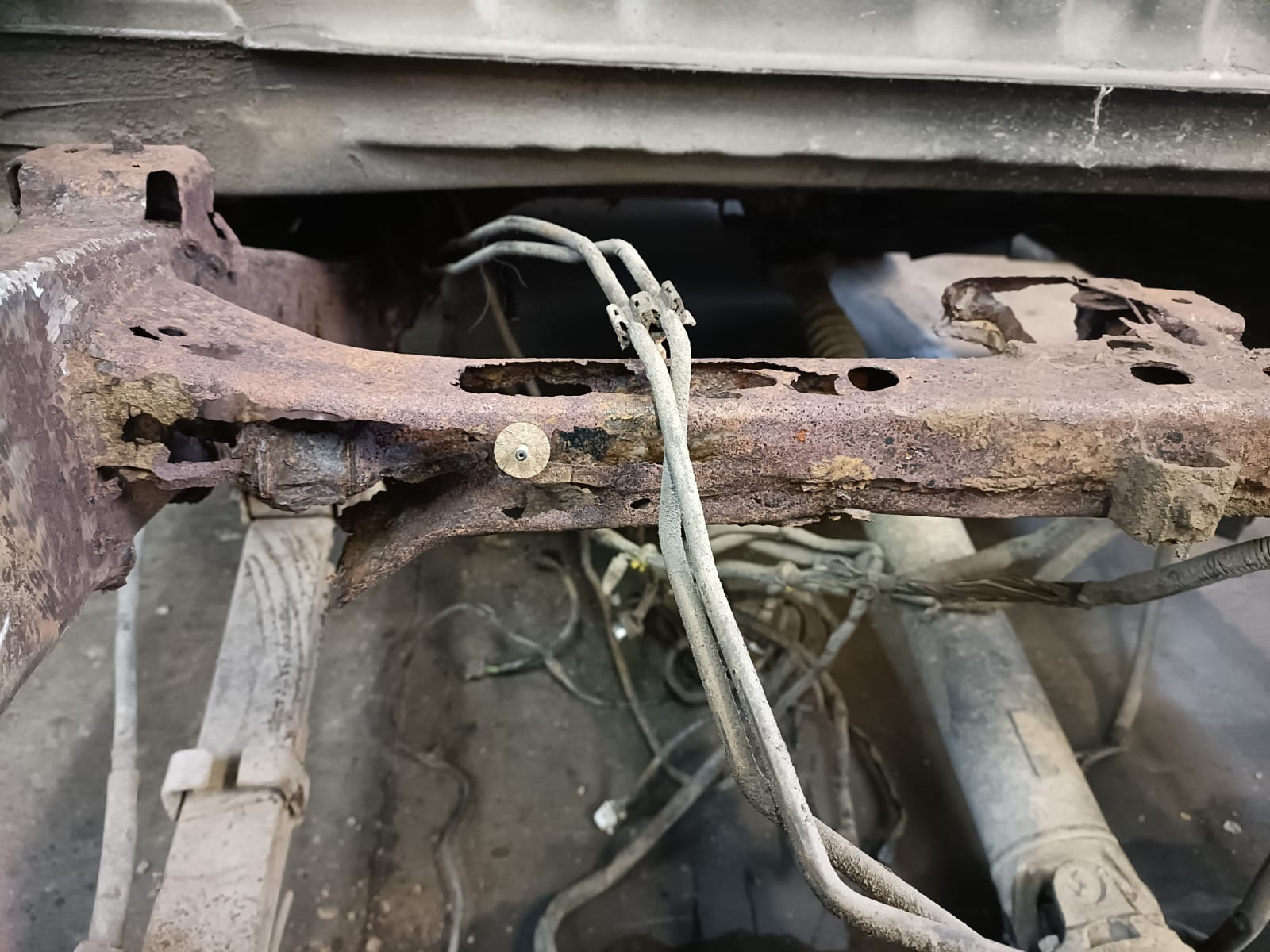
What Is a Chassis?
In its original engineering sense, a chassis is a separate structural frame — a ladder or box structure — that the vehicle’s body, engine, suspension, and running gear are all mounted onto. This type of construction is still used on trucks, large commercial vehicles, agricultural machinery, and some 4x4s. The chassis is a distinct, visible structure you can see under the vehicle.
On most modern cars — from about the late 1970s onward — the construction method changed to monocoque (or unibody) design. In monocoque construction, there is no separate chassis frame. Instead, the vehicle’s body itself provides the structural integrity: the floor pan, sill box sections, roof rails, A and B pillars, and various structural members are all integrated into a single welded steel structure.
When mechanics and NCT inspectors refer to “chassis” in the context of a modern car, they’re talking about the structural members within that monocoque body: the floor pan, the sill box sections, the chassis rails (the structural channels running under the floor fore-to-aft), outriggers (cross-members connecting the main rails), and similar load-bearing sections.
What Does Chassis Repair Actually Involve?
Chassis repair — in the practical sense that affects most Irish vehicles — almost always means one of two things:
Structural rust repair (rot) The most common type by far in Ireland. Corrosion has compromised one or more structural sections to the point where the metal is perforated or significantly weakened. Repair involves cutting out the rotten steel and welding in new sections. The result, if done properly, restores structural integrity to the affected area.
Impact damage repair (bent or cracked chassis) Less common, but significant when it occurs. A pothole strike at speed, a collision, or an off-road incident can bend, crack, or distort chassis members. On vehicles with a separate chassis frame, this often requires specialist jig equipment to restore geometry. On monocoque vehicles, structural sections can be cut and replaced, or in some cases straightened and reinforced.
In both cases, the work involves structural metalwork — cutting, forming, and welding steel to restore the structural integrity of the affected section.
How Does Chassis Damage Happen on Irish Vehicles?
Corrosion is far and away the most common cause on Irish vehicles. The combination of:
- Road salt used on Irish roads in cold conditions
- Persistent damp climate with long wet seasons
- Potholed roads that chip underseal and create water entry points
- The border road network around Co. Louth, Armagh, and the A91 corridor, which is particularly demanding
…means that structural rust in chassis sections is endemic on Irish cars over a certain age. Most vehicles from 10–12 years onward will show at least some underbody corrosion; many will have sections that warrant structural repair.
Impact damage occurs from pothole strikes (particularly on the A1, A91, and rural roads through north Louth), kerb strikes, and minor collisions. The symptoms are often subtle — handling changes, alignment that won’t hold — rather than obvious structural failure.
Do You Actually Need a Chassis Repair?
The honest answer depends on what’s there. A chassis repair is genuinely needed when:
- An NCT inspector has identified structural corrosion or damage — this isn’t an advisory; it’s a fail
- Physical inspection reveals perforated or significantly weakened structural sections
- The vehicle is showing handling symptoms (pulling, alignment instability, body flex) that point to structural rather than suspension causes
- Pre-purchase inspection reveals structural concerns on a vehicle you’re considering buying
It is not needed when:
- Surface rust on cosmetic panels is the only finding
- General underbody grime or surface corrosion is present but hasn’t reached structural sections
- Suspension or steering wear is producing handling symptoms (these are different problems)
The only reliable way to know is a proper inspection — with the vehicle on a lift, by someone who does structural metalwork. A general mechanic who isn’t a structural welder isn’t always well placed to assess chassis condition accurately.
What Happens If Chassis Damage Is Ignored?
If it’s structural corrosion: the rot continues to spread. What’s a manageable localised repair today is a more extensive and expensive repair in 12 months. And at some point the vehicle becomes unsafe to drive — and fails the NCT.
If it’s impact damage: distorted chassis geometry causes ongoing tyre wear, handling instability, and stress on suspension and steering components. It also affects the vehicle’s behaviour in a collision — a vehicle with pre-existing structural distortion doesn’t behave as the engineers designed in a crash scenario.
Neither type of chassis damage improves on its own.
Frequently Asked Questions
Q: Does every car have a chassis? A: In the traditional sense — a separate frame — no. Most modern cars are monocoque construction, where the body itself is the structure. But the structural sections within that body (rails, sills, floor pan) serve the same function and are what inspectors and mechanics mean by “chassis” in practice.
Q: Can a chassis be repaired rather than replaced? A: Yes — in most cases. Structural sections can be cut out, new steel welded in, and the vehicle restored to structural integrity. Full chassis replacement (on separate-chassis vehicles) is unusual and expensive; structural section repair is the standard approach.
Q: Is chassis repair the same as chassis alignment? A: Not exactly. Chassis alignment refers to restoring the geometric accuracy of the chassis frame — relevant on separate-chassis vehicles and on monocoque vehicles after impact damage. Chassis repair is the broader term covering both structural metal repair and any geometry restoration needed.
Q: How do I know if my vehicle has a separate chassis or monocoque construction? A: Almost all cars from the 1980s onward are monocoque. Pickup trucks, large vans, some older Land Rovers and agricultural vehicles still use separate chassis construction. If you’re unsure, we can tell you when you bring the vehicle in.
If you’re in Dundalk or across Co. Louth and want to know whether your vehicle needs chassis repair, contact Quinn Engineering in Omeath. We’ll assess it properly and give you a straight answer before any money changes hands. See our chassis repair service here.