Does Your Car Need Underbody Welding? Signs to Watch
How to Tell If Your Car Needs Underbody Welding
Most drivers never look underneath their car. It’s not comfortable, it’s not clean, and there’s rarely an obvious reason to do it until the NCT inspector does it for you and produces a structural fail.
The problem is that underbody rot — the type that leads to structural welding being necessary — is almost always further advanced by the time it shows any obvious surface symptom. Knowing what to look for, and when to get a proper inspection, can save you from a nasty surprise on test day.
Here are the signs that your car’s underside may need welding attention.
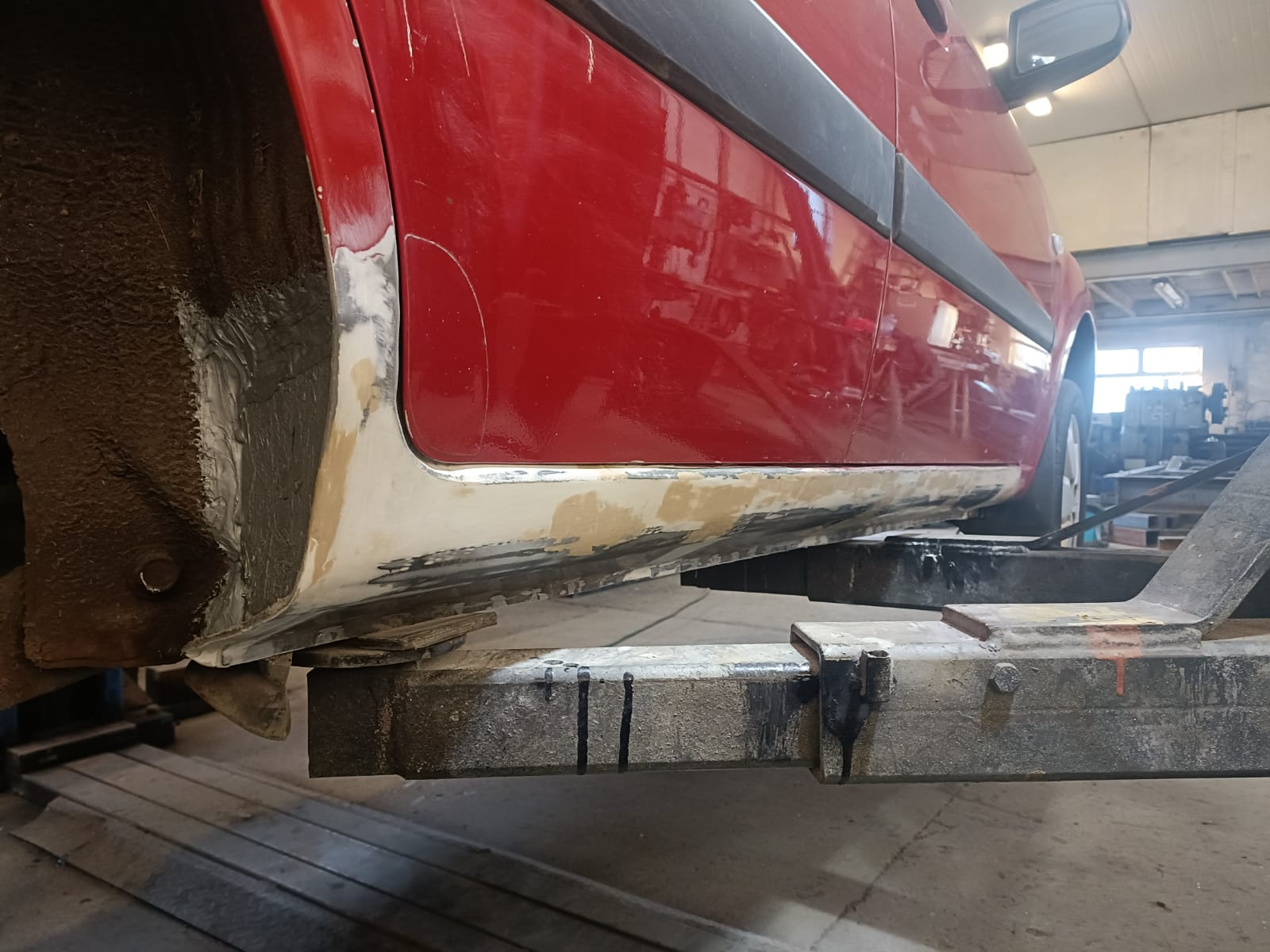
Signs You Can Spot From Inside the Car
Damp or wet carpets with no obvious cause If the interior footwell areas or the boot are persistently damp despite no obvious water ingress through seals or glass, floor pan perforation is a real possibility. Moisture comes up from underneath through rust holes in the floor. This is particularly common on driver’s side footwells and rear passenger footwells on older Irish vehicles.
A musty or metallic smell from the footwell area Rust rot and the combination of damp metal and wet carpet produces a distinctive smell that’s different from a damp car interior from a leaking seal. If it’s specifically from floor level and persistent, it’s worth investigating underneath.
Unusual sounds when driving over rough surfaces A sound that’s structural rather than suspension-related — harder to pin down, coming from under the body rather than from wheel or suspension components — can indicate compromised body rigidity from rot in the sill box sections or floor pan junctions.
Signs You Can Spot From Outside the Car
Bubbling or lifting paint on the sill line or floor edges Rust expanding beneath paint creates pressure that causes the surface to bubble. By the time paint bubbles, the metal underneath has already been corroding for some time. Any bubbling on the lower body panels — particularly at the sill base, door edges, or around wheel arches — warrants a closer look.
Rust breaking through at the bottom of the door aperture The point where the door sill meets the floor, visible when you open the door and look at the threshold area, is a common first breakthrough point. If you can see rust or rust staining there, the inner sill box section is often well underway.
Rust spots appearing under door edges The outer sill, visible below the door, often shows surface rust first along the lower edge. Surface rust here isn’t automatically a structural issue — but it’s an early warning that warrants proper inspection of the inner section.
Drain holes that are blocked or missing Sill box sections have small drain holes at their lowest points. If you look under the door sill and these holes are blocked with debris, the box section is potentially holding water internally. Blocked drain holes are one of the primary causes of inner sill rot on Irish vehicles.
Signs You Can See From Underneath (Safely)
If you can safely get the car onto axle stands — not just a jack — and look underneath, these are the indicators:
Visible perforation anywhere in the underbody Any hole in the floor pan, sill section, wheel arch inner, or chassis rail/outrigger is a welding job. Holes don’t improve — they spread, and they fail NCT tests.
Heavily scaled or pitted metal Metal that has progressed beyond surface rust to significant scaling and pitting in structural sections is weakened even if it hasn’t fully perforated. This is the state where rot breaks through quickly.
Underseal that is lifting, cracking, or bubbling Intact underseal that is starting to lift from the metal surface beneath it indicates active corrosion is forming pressure beneath. The area underneath is typically worse than the underseal surface suggests.
Soft or flexible metal under hand pressure Press firmly on structural sections (not glass, not trim, not plastic). A section that flexes or moves under hand pressure where it should be rigid has been compromised by corrosion. This is the test the NCT inspector applies.
Visibly missing or deteriorated underseal with exposed bare steel Areas where underseal is completely gone and bare metal is exposed to the elements. These are active corrosion sites that need either treatment (if non-structural and surface only) or welding repair (if structural).
When Photos Aren’t Enough
Sending photos of your underbody is a useful starting point for a rough assessment — and we’re happy to look at WhatsApp photos and give you an initial view. But photos have a significant limitation: they don’t show what’s under intact-looking underseal.
A large proportion of structural underbody rot is hidden beneath underseal that looks fine from above. The only way to assess what’s genuinely there is physical inspection — pressing on sections, using a probe where needed, and looking at areas where the underseal has lifted or where there’s visible stress in adjacent sections.
If you’re in the Dundalk area, bringing the vehicle to Quinn Engineering in Omeath for a proper lift inspection is the most reliable way to know. We’ll tell you what’s there, what it takes to fix, and whether it’s worth fixing — before you commit to anything.
Frequently Asked Questions
Q: My car is 12 years old and never had the underside checked. Should I be worried? A: On an Irish-registered vehicle that age, an underbody inspection is genuinely worthwhile. The combination of road salt, damp, and Irish climate conditions means that structural rust in sills, outriggers, and floor sections is very common from around 10 years of age. Some vehicles sail through; others have significant rot. The only way to know is to look.
Q: Can I check the underbody myself? A: You can get a reasonable impression if you have proper axle stands and a torch. But physical probing of sections — the real test — requires being properly underneath the vehicle in a safe position, which most people aren’t set up to do. A specialist with a lift can assess the whole underbody in proper conditions in 20 minutes.
Q: My car passed the NCT last year. Does that mean the underbody is fine? A: It means the underbody was in passable condition at the point of inspection. NCT tests are snapshots — and in the year since your last test, corrosion has continued. This is particularly relevant for vehicles already showing any borderline areas at last inspection.
Q: How much does an underbody inspection cost? A: We’ll assess your underbody as part of the process of giving you a quote. Come to our workshop in Omeath — it costs you nothing to get a proper look.
If any of the signs above match what you’re seeing on your car, contact Quinn Engineering in Omeath. We cover Dundalk and the full Co. Louth area for underbody welding and structural repairs. See our underbody welding service here.